Moisture does not prove that a pest problem exists, but it is an important part of the property story. Leaks, condensation, poor drainage, damp materials, and standing water can influence many kinds of activity and can also damage the building on their own. Clear moisture notes help a pest professional decide where to look and when another trade may need to be involved.
Describe What You Can Actually See
Use plain language. Write “water beads on the cold-water pipe each morning” or “the cabinet base is damp after the sink runs,” not “termites came from a plumbing leak.” Record the exact location, date, time, and whether the condition is constant or intermittent.
Differentiate liquid water from staining, swelling, musty odor, soft material, or elevated humidity. A stain can remain after the source has stopped, while active moisture may not leave an obvious mark immediately. Do not touch suspected mold, contaminated water, or damaged materials to test them.
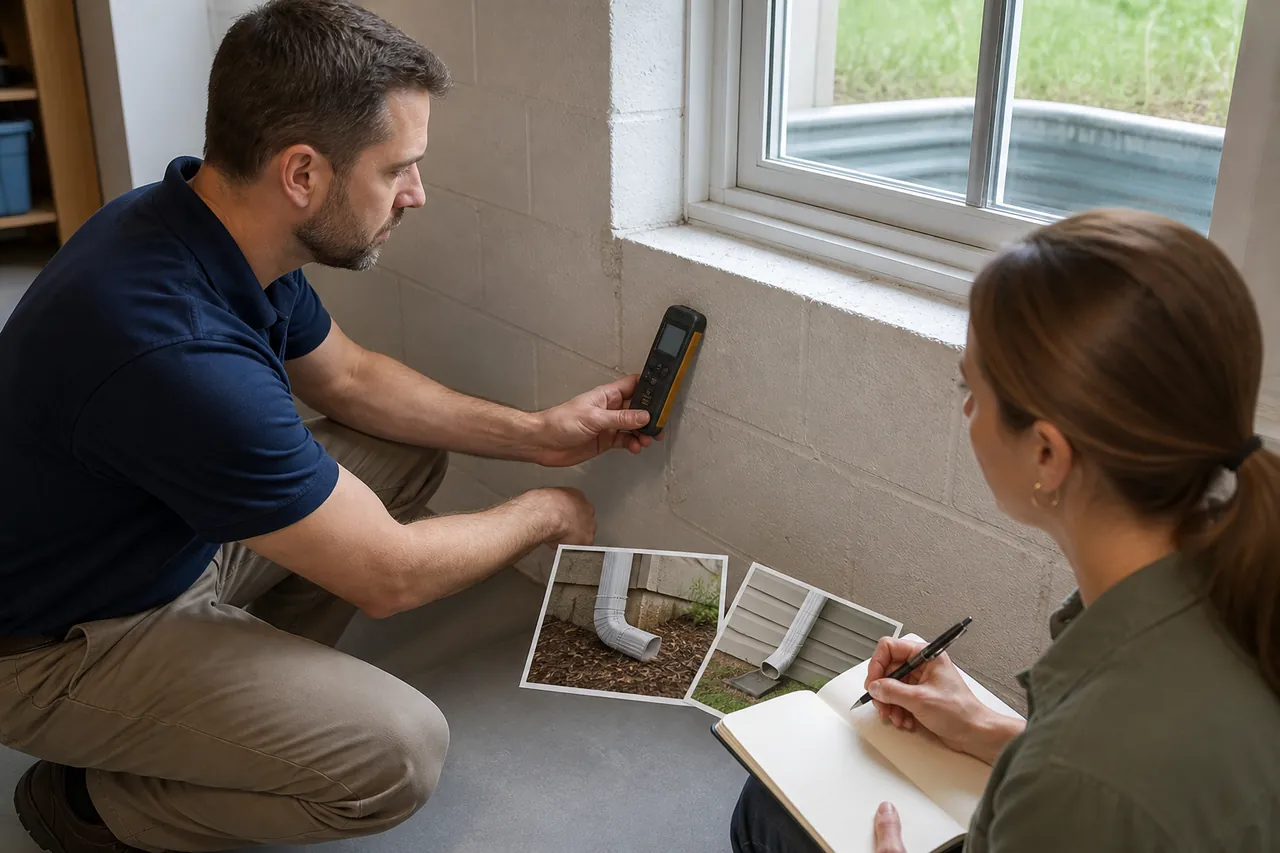
Photos are most useful when one image shows the broader location and another shows the visible condition. Photograph only from safe access and avoid opening walls, moving heavy appliances, or entering crawlspaces.
Watch for Timing Patterns
Note whether moisture appears after rain, irrigation, bathing, cooking, laundry, air-conditioning operation, or plumbing use. Include recent weather and any repair already attempted. Timing may help distinguish roof, drainage, plumbing, or condensation questions, but diagnosis still belongs to an appropriate professional.
For outdoor areas, record how long standing water remains after rain or irrigation. Mark clogged-looking drainage points, low spots, containers, dense vegetation, and downspout discharge visible from ordinary walking areas. Do not enter flooded ground or handle water that may be contaminated.
Connect Moisture With Pest Observations Carefully
If insects, droppings, sounds, or damage were noticed nearby, give them separate entries. State distance and timing rather than declaring a cause. For example: “Small insects observed on the bathroom sill on three evenings; condensation present on the window each morning.” This keeps the relationship available for assessment without overstating it.
Also note comparable dry areas where no activity has been seen. A technician may use those contrasts during inspection. Absence of a sighting does not prove absence of pests, but it is still part of the observation record.
Include Building and Household Context
Mention exhaust fans that are not operating normally, recurring plumbing issues, roof or gutter work, basement seepage, irrigation overspray, or recent water damage. Record stored cardboard, fabrics, or other materials that became damp, but do not move contaminated items through the property without guidance.
Household routines can matter. Pet water bowls, plant saucers, humidifiers, and frequent door use are normal features, not signs of poor care. Identifying them simply helps the provider understand the environment.
Route the Problem to the Right Professional
Pest service does not replace plumbing, roofing, drainage, ventilation, or water-damage work. If active leaking, electrical exposure, structural deterioration, sewage, or extensive mold is present, keep people away from the affected area and contact an appropriate qualified provider.
A pest professional can explain which visible moisture conditions relate to the inspection and which sit outside the pest-service scope. Ask for those boundaries in writing.
Keep the Notes After Repairs
When moisture work is completed, record the date, location, and repair description. Continue observations only as safely directed. Add later pest sightings to the same timeline rather than assuming the repair automatically resolved every concern.
Good moisture notes connect property conditions with time and place. They allow several professionals to work from the same facts, reduce repeated guesswork, and keep pest decisions grounded in current inspection rather than in a broad assumption that all damp areas behave alike.