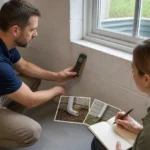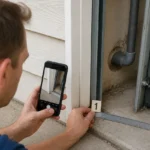
A pest sighting is useful information, but memory becomes unreliable quickly. By the time a service visit is scheduled, it can be difficult to recall whether the insect was near a window or a sink, whether the sound came from a wall or the ceiling, or whether activity happened once or repeatedly. A brief, factual record gives a pest professional a clearer place to begin.
Record the Exact Location
Use a location another person can find without interpretation. “Kitchen” is broad; “inside the cabinet beneath the kitchen sink, near the rear pipe opening” is specific. For an exterior sighting, describe the side of the building and a fixed reference such as a door, downspout, foundation vent, tree, or waste-storage area.
If activity appears in more than one place, list each location separately. Do not combine them into a single assumption about where the pest is traveling. A technician may discover that the observations are related, but the record should preserve what was actually seen.
Include Time and Frequency
Write the date and approximate time as soon as possible. Note whether lights were on, food preparation was underway, the room was quiet, or outdoor conditions had recently changed. These details can help establish a pattern without proving a cause.
Distinguish one sighting from repeated activity. Useful descriptions include “one insect seen on two evenings,” “scratching heard for several minutes on three nights,” or “droppings noticed once during cabinet cleaning.” Avoid words such as “infestation” unless a qualified professional has confirmed that description.
Describe, Do Not Diagnose
Write down observable characteristics: approximate size, color, shape, movement, wings, markings, or the sound you heard. Compare size with a familiar object only when that comparison is clear. Identification from memory or an online image can be wrong, especially for small insects and immature stages.
A photo can help if it can be taken without touching, cornering, or disturbing the animal. Include a wide image showing the location and a closer image only from a safe distance. Keep the original file so the date and detail are not lost through repeated sharing.
Never handle an unknown insect, droppings, nesting material, dead wildlife, or a potentially venomous animal for the sake of documentation. Keep people and pets away and contact an appropriate professional when the situation may present an immediate risk.
Note Related Conditions Carefully
Without moving appliances or opening concealed assemblies, record visible moisture, food residue, damaged packaging, gaps, gnawing, webbing, shed material, or odors near the sighting. State the condition plainly. “Water visible beneath the pipe” is more useful than “pests are coming from a leak.”
Mention recent changes such as deliveries, construction, travel, used furniture, landscaping work, or a plumbing issue. These events may or may not be relevant, so keep them as context rather than conclusions.
Preserve the Evidence and the Timeline
Save sightings in one note or folder, arranged by date. If something is cleaned for normal hygiene, photograph the location first when safe and record what was removed. Do not spread specimens or suspected material through the property. Follow the service provider’s instructions if a specimen is requested.
Bring the record to the initial conversation. A pest professional can compare location, timing, frequency, and site conditions with an inspection. Good notes do not replace that assessment, but they reduce guesswork and help the provider explain what is confirmed, what remains uncertain, and what next step is appropriate.