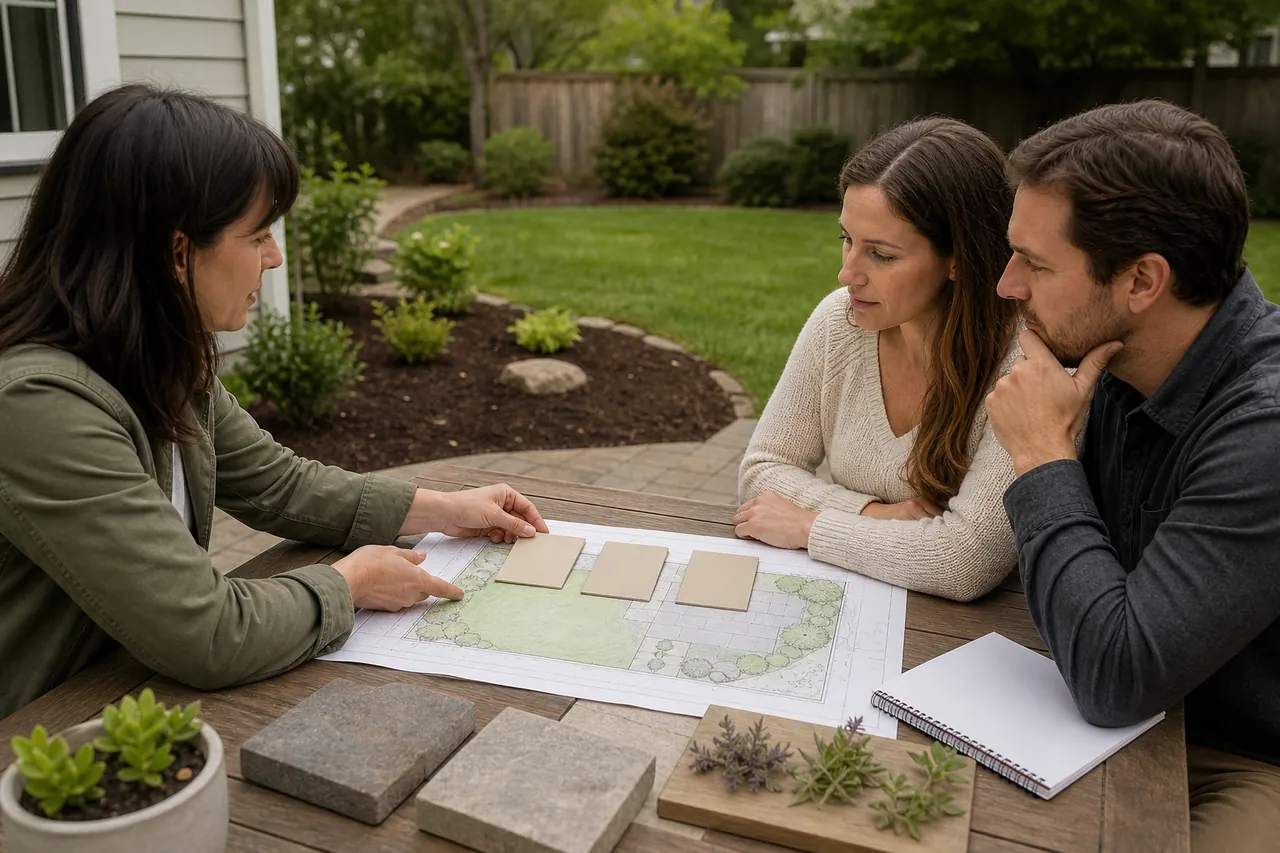
Not every landscape project should be completed at once. Phasing can make sense when different areas have different urgency, when major property work is still ahead, or when the site needs time to reveal how drainage, access, or plant establishment performs. The important point is to design the whole relationship before dividing the work.
Start With a Complete Direction
Even if only one area will be installed first, develop an overall concept for circulation, grades, drainage, utilities, planting, hardscape, and major future features. A disconnected first phase can occupy space needed later or create finished work that must be disturbed again.
Mark known future plans such as an addition, shed, driveway change, outdoor kitchen, pool, or utility upgrade. These ideas may not be final, but the landscape plan should avoid placing long-lived plants or expensive surfaces where likely construction access will be required.
Identify existing features to preserve throughout all phases. Mature trees, functioning drainage paths, service access, and useful established planting need protection from the beginning, not only when the area around them becomes active.
Put Dependencies Before Decoration
Some work controls what can safely follow. Grading and drainage decisions generally need to be understood before new beds or hardscape are finished. Underground utilities, sleeves, or irrigation connections may need to cross an area before paving. Construction access should be resolved before delicate planting occupies the route.
Ask the provider to show dependencies on the phase plan. Each phase should state what must already be complete and what connection must remain available for later work. This prevents a visually finished area from blocking the practical next step.
Decide What Creates Immediate Value
A first phase can address a pressing problem or establish a useful core. Safe access, erosion concerns, failing surfaces, or drainage observations may deserve early assessment. In other cases, a patio, entrance, or manageable planting area provides daily value while the rest waits.
Avoid scattering small pieces across the entire property if doing so leaves none of them functional. A completed, coherent area often serves the household better than many unfinished edges. However, temporary conditions at phase boundaries must remain safe, stable, and maintainable.
Plan the Transitions
Draw where each phase ends. Ask how soil, mulch, paving edges, irrigation, and drainage will be handled temporarily. An unfinished edge should not leave a trip hazard, exposed excavation, uncontrolled runoff, or a maintenance area that cannot be reached.
Material continuity also needs thought. Products, colors, and plant availability can change. Record exact selections, but discuss in advance how later substitutions would be evaluated. Natural weathering may cause old and new materials to look different even when specifications match.
Protect Earlier Work
Document delivery and equipment routes for future phases. Consider whether later excavation could compact soil, damage roots, cross finished paving, or interrupt irrigation. Sometimes a less obvious construction order is preferable because it protects the completed landscape.
Keep dated plans and completion photos from every phase. Update the overall drawing to show actual locations and approved changes. Future providers should be able to distinguish installed features from conceptual ones.
Reassess Before Each New Phase
A phased plan should not run on autopilot. Household needs, site conditions, and existing plants may change between stages. Before starting the next phase, inspect how drainage, circulation, maintenance, and plant establishment are performing. Confirm that the remaining design still makes sense.
Phasing works best when it is a deliberate sequence, not simply a project stopped between unrelated tasks. A complete direction, clear dependencies, safe temporary edges, and accurate records allow each stage to stand on its own while still contributing to the intended whole.