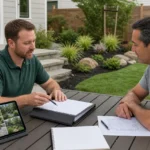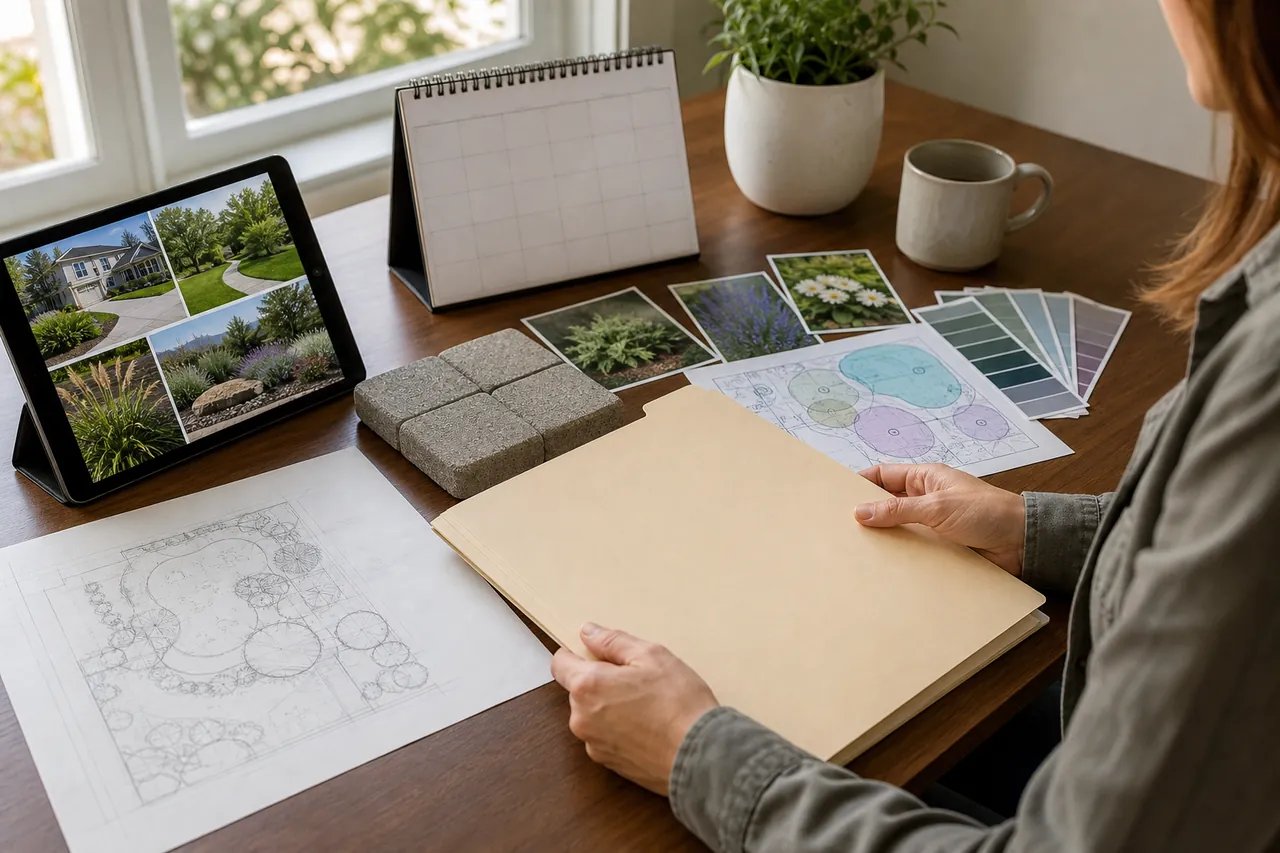
A landscape project changes over time. Plants grow, materials weather, irrigation is adjusted, and future owners or service providers may need to understand decisions that are no longer visible. A well-organized project file preserves that information in one place and can make later care, repairs, and additions far easier to discuss.
Start With the Approved Plan
Keep the final proposal, plan drawings, written scope, and accepted schedule together. Earlier concepts can be useful, but label them clearly so they are not mistaken for the approved version. If the project changes during installation, attach dated revisions or change notes explaining what was adjusted.
A plan should identify major areas, plant locations, hardscape, drainage elements, irrigation zones, and features that remain from the original landscape when those items are part of the work. Save a simple final or “as-built” sketch if actual locations differ from the planning drawing.
Record Plants and Materials Precisely
Retain the plant list with botanical and cultivar names, quantities, and locations. Common names alone may not distinguish two plants with different mature sizes or care needs. Note approved substitutions and the reason they were made.
For hardscape and built features, save manufacturer, product line, color, size, finish, and pattern information when available. Photograph packaging labels before they are discarded. Keep a small, clearly labeled sample only if it can be stored safely and is genuinely useful for future matching.
Record soil products, mulch type, edging, lighting fixtures, irrigation components, and finishes at a level appropriate to the project. Do not rely on memory or a receipt containing only a generic description.
Add Dated Photographs
Take wide photos before work begins, during key stages, and after completion. Images made before elements are covered can provide valuable context for future professionals, but they should supplement—not replace—required locating and safe investigation.
Label photos by date and area. A folder named “backyard” is more useful when its files say “rear patio base before paving” or “east bed after planting.” Avoid presenting a photograph as an exact measurement unless it includes reliable documented references.
Preserve Care and Operating Information
Store establishment watering guidance, pruning notes, seasonal care instructions, and information supplied for new materials. Include the final irrigation map and controller schedule if irrigation work was part of the project. Record who should be contacted for specialized maintenance, without assuming that every future task falls within the original scope.
Keep manuals for lighting, pumps, controllers, or other installed equipment. Write down the date settings were last confirmed and note any seasonal adjustment that the provider explained.
Track Decisions After Completion
The file remains useful after handoff. Add significant plant replacements, drainage observations, irrigation repairs, material changes, and later phases. A short entry should state the date, exact location, observed condition, and work completed. Separate fact from assumption.
Receipts, completion notes, and contact details can be retained according to the homeowner’s own recordkeeping needs. Sensitive payment or account information should be stored securely rather than in a shared project folder.
Make the File Easy to Use
Create both a digital folder and, if helpful, a slim printed summary. Use consistent names such as Plans, Plants, Materials, Irrigation, Care, Photos, and Changes. Give household members access to the location, and transfer a copy when responsibility for the property changes.
The best landscape project file is not necessarily the largest. It is the one that clearly connects selections, locations, care, and later changes. That record lets future decisions begin with documented facts instead of trying to reconstruct the landscape’s history from appearance alone.