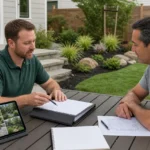
A hardscape plan should explain more than where a patio, path, wall, or set of steps will sit. It should connect everyday use with dimensions, drainage, access, materials, and the existing property. Asking detailed questions early helps uncover conflicts before installation begins and makes the proposed scope easier to compare with the finished work.
What Will the Space Support?
Start with the intended use. A path used only for occasional garden access has different needs from a primary route between the driveway and an entrance. A patio for two chairs differs from one expected to hold dining furniture, a grill, and regular foot traffic.
Ask how the proposed dimensions were determined. If furniture is involved, sketch its actual footprint and leave room for chairs to move. Consider door swings, gates, bins, hoses, and routine maintenance equipment. Confirm whether the route remains comfortable when people carry items or pass one another.
Accessibility and step placement deserve direct discussion. Changes in elevation should be reviewed in relation to entrances, thresholds, slopes, lighting, and handrails where applicable. A landscape provider can explain which conditions require further design or specialist input.
How Will Water Move?
Hard surfaces change how rainfall travels across a property. Ask where water currently comes from, where the finished surface will direct it, and how runoff will be kept away from buildings and neighboring areas. Discuss low spots, downspout outlets, irrigation overspray, and soil that stays wet.
The plan should show intended slopes and drainage features clearly enough to review. If a wall is proposed, ask how drainage behind it is addressed and how its relationship to nearby grades will be evaluated. Hidden conditions cannot always be known in advance, so the scope should also explain how unexpected findings will be handled.
What Lies Below and Beside the Work?
Ask what is known about utilities, irrigation lines, roots, old foundations, or previous construction in the area. Existing records and visible markers are useful, but required utility-locating procedures and on-site verification still matter.
Large trees need particular care. Excavation and compaction near roots may cause damage even when the trunk is not close to the work. Identify plants and site features that must be protected, and ask how access for equipment and material delivery affects them.
Which Materials Are Being Considered?
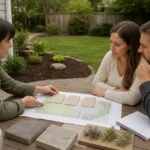
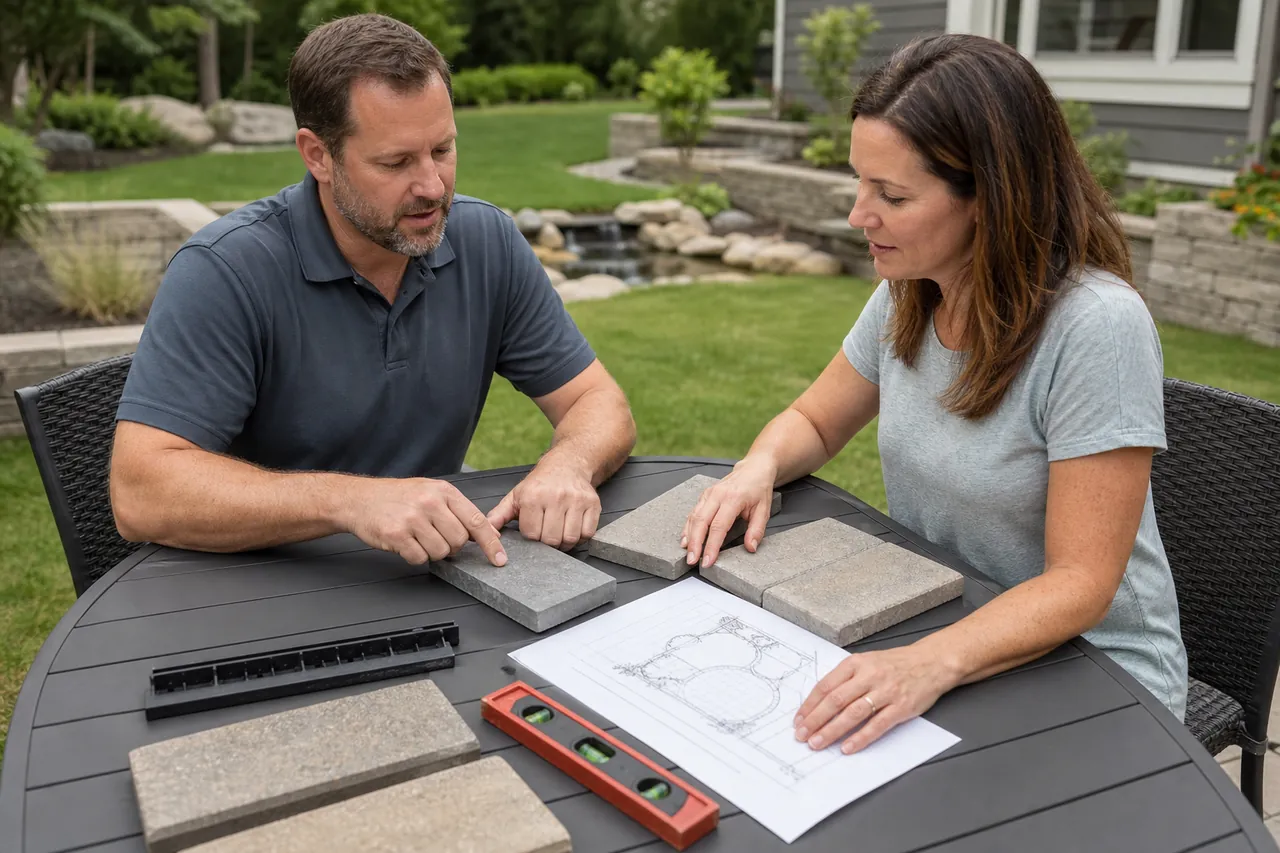
Discuss the exact material type, color range, texture, edge treatment, and pattern rather than relying on a broad label such as “pavers” or “stone.” Ask to see samples in outdoor light. Natural and manufactured materials can vary, so clarify what variation is expected and how substitutions would be approved.
Maintenance matters as much as appearance. Ask how the surface responds to staining, weeds at joints, seasonal weather, and ordinary cleaning. If sealers or jointing products are proposed, request product details and care instructions.
How Will Construction Affect the Property?
Confirm the access route, staging area, protection for existing surfaces, and location for excavated material. Discuss noise, dust, gate access, pets, and any periods when entrances or outdoor areas cannot be used. The plan should identify who restores disturbed lawn, planting, irrigation, or fencing.
Ask what checkpoints occur before base material is covered and before the project is considered complete. Photos and notes at those stages can become valuable property records.
What Will the Final Handoff Include?
A useful handoff identifies final materials, care guidance, drainage features, approved changes, and any open items. Request an updated sketch if the installed layout differs from the original plan.
Clear answers do not eliminate every unknown, but they reveal whether the hardscape has been considered as part of the whole site. That is the difference between choosing a surface and developing a durable, usable landscape element.