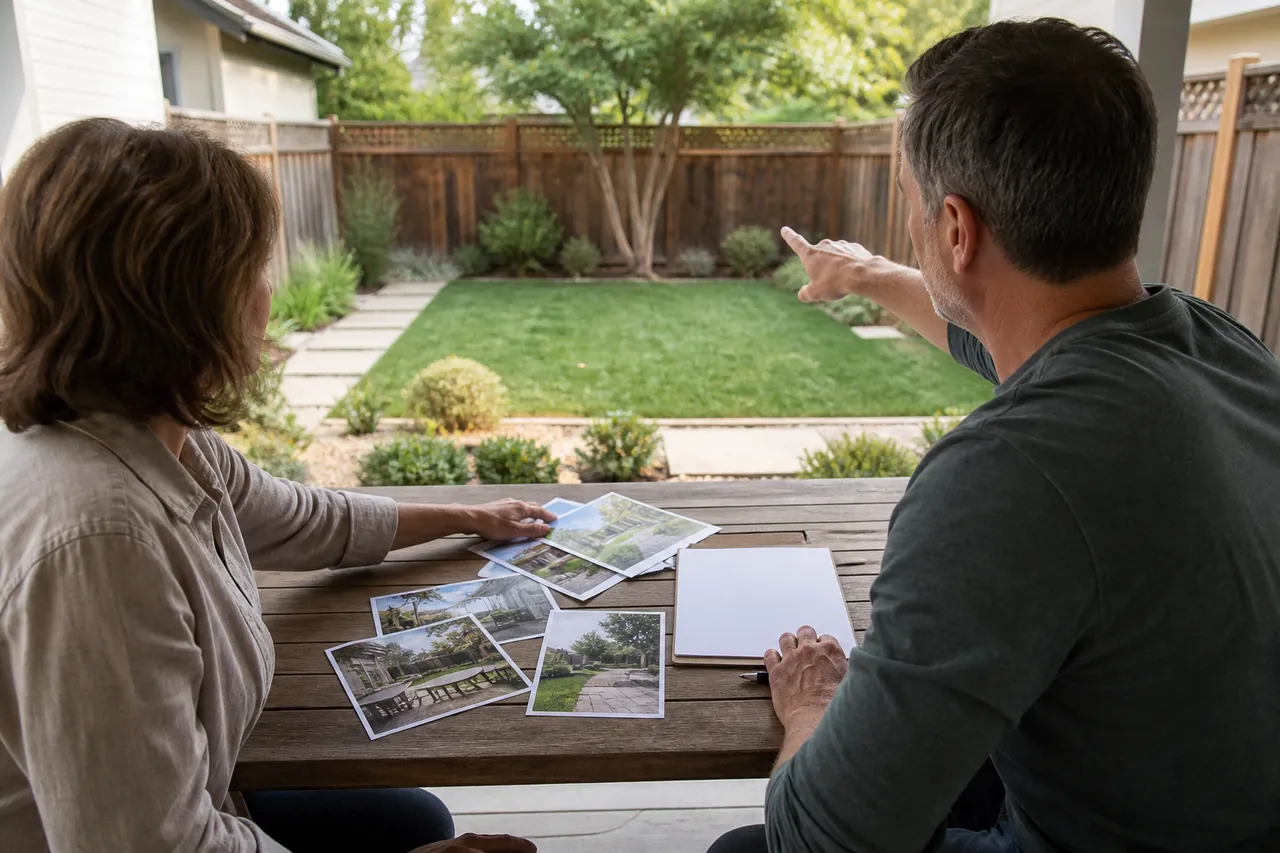
A productive landscape conversation starts well before anyone chooses plants or draws a patio. The most useful starting point is a clear description of how you want the property to work, what you enjoy about it now, and what causes frustration. Those details give a landscape professional something more meaningful than a collection of inspiration photos: they reveal the priorities that should guide every later decision.
Begin With Everyday Use
Think through a normal week in the yard. Do children need open space to play? Does a dog follow the same route along a fence? Do you regularly carry food from the kitchen to an outdoor table? Perhaps the front walk needs to feel more welcoming, while a side yard mainly provides access for bins and equipment.
Describe who uses each area, when they use it, and what they need to do there. Include practical movements such as bringing a mower through a gate, reaching an outdoor faucet, or walking from a driveway after dark. A plan that looks attractive on paper can still be inconvenient if these routines are overlooked.
Explain the Feeling You Want
Words such as “clean,” “relaxed,” or “colorful” mean different things to different people. Add examples that make your preference easier to understand. A clean landscape might mean broad planting groups and crisp edges rather than many individual varieties. A relaxed garden might include softer shapes and plants that move in the breeze, but not necessarily an informal or untidy appearance.
Photos can help, especially when you note the exact feature you like. It may be the spacing, the material combination, the amount of foliage, or the transition between planted and paved areas. Also save examples you dislike. Both kinds of reference help distinguish your taste from a passing trend.
Identify Must-Keep Features
List existing elements that should remain. These may include a mature tree, a useful shed, a favorite view, a memorial plant, established screening, or a path that already works well. Note features that could move and items that should be removed only after discussion.
Property conditions matter too. Mention areas that stay wet, slopes that are hard to cross, exposed spots, heavy shade, strong afternoon sun, or places where soil is easily disturbed. These observations do not replace a site assessment, but they help a provider focus the visit and ask better questions.
Be Honest About Upkeep
Describe the maintenance you are willing and able to handle. Consider mowing, pruning, seasonal cutting back, leaf cleanup, irrigation checks, and the time required to keep paved areas clear. If you prefer to hire ongoing help, say which tasks you expect that service to cover. If you enjoy gardening, explain where you want room to make changes yourself.
Avoid asking for a “no-maintenance” landscape. Every outdoor space requires some attention, and different materials simply shift the type and timing of that work. A realistic maintenance preference leads to more appropriate choices.
Put Priorities in Order
Separate essentials from ideas that would be nice to include. Safety, access, drainage, and protection of important existing features often need attention before decorative additions. If several goals compete for the same space, rank them. A dining area, open lawn, privacy planting, and storage may not all fit comfortably without tradeoffs.
Finish your brief with three short lists: what must improve, what must remain, and what could happen later. That summary gives your landscape provider a solid basis for evaluating the property and developing a plan that reflects real use rather than assumptions.